1. The Success Paradox
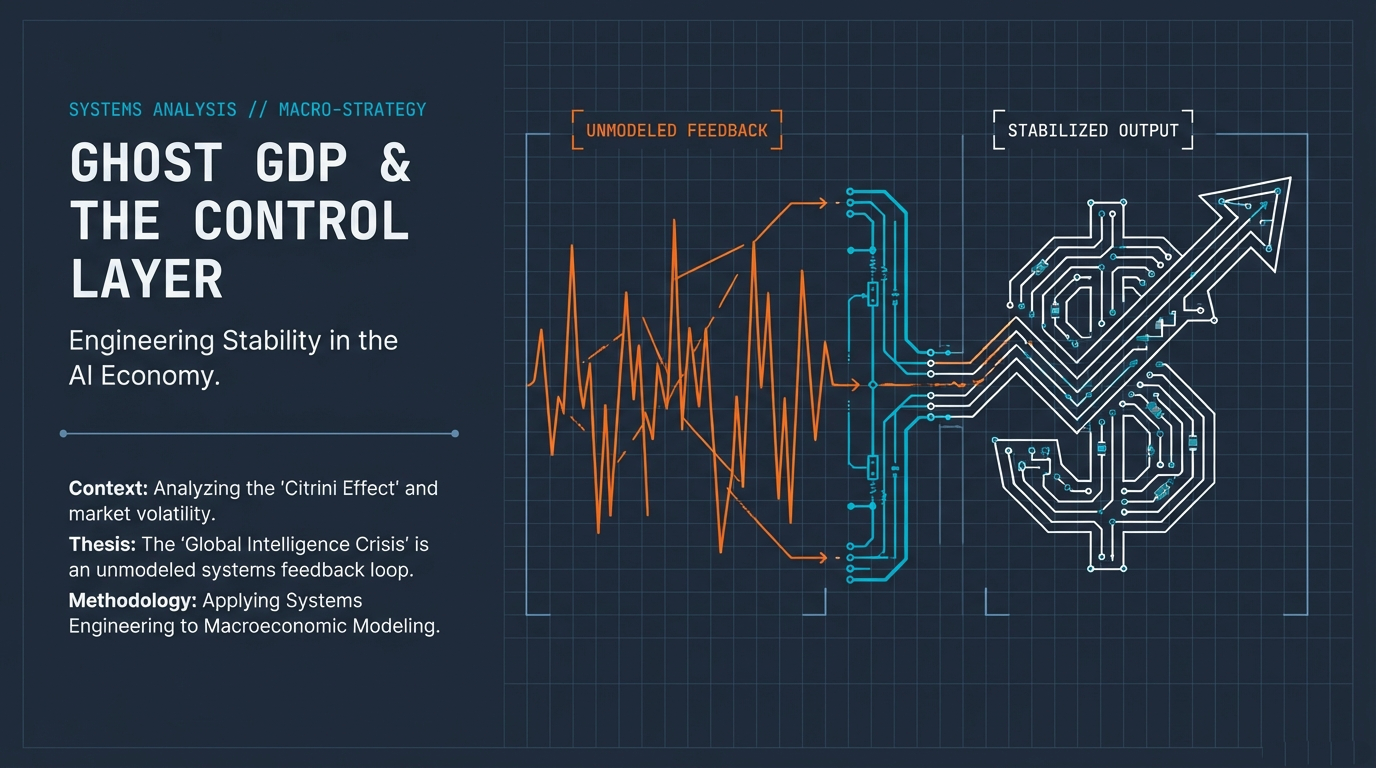
For the better part of a decade, the primary anxiety surrounding Artificial Intelligence was its potential for probabilistic failure—the risk that hallucinations, high costs, or narrow utility would keep it relegated to the periphery of the economy. However, following the recent Citrini Research report, a more unsettling narrative has emerged: the move from probabilistic failure to deterministic disruption.
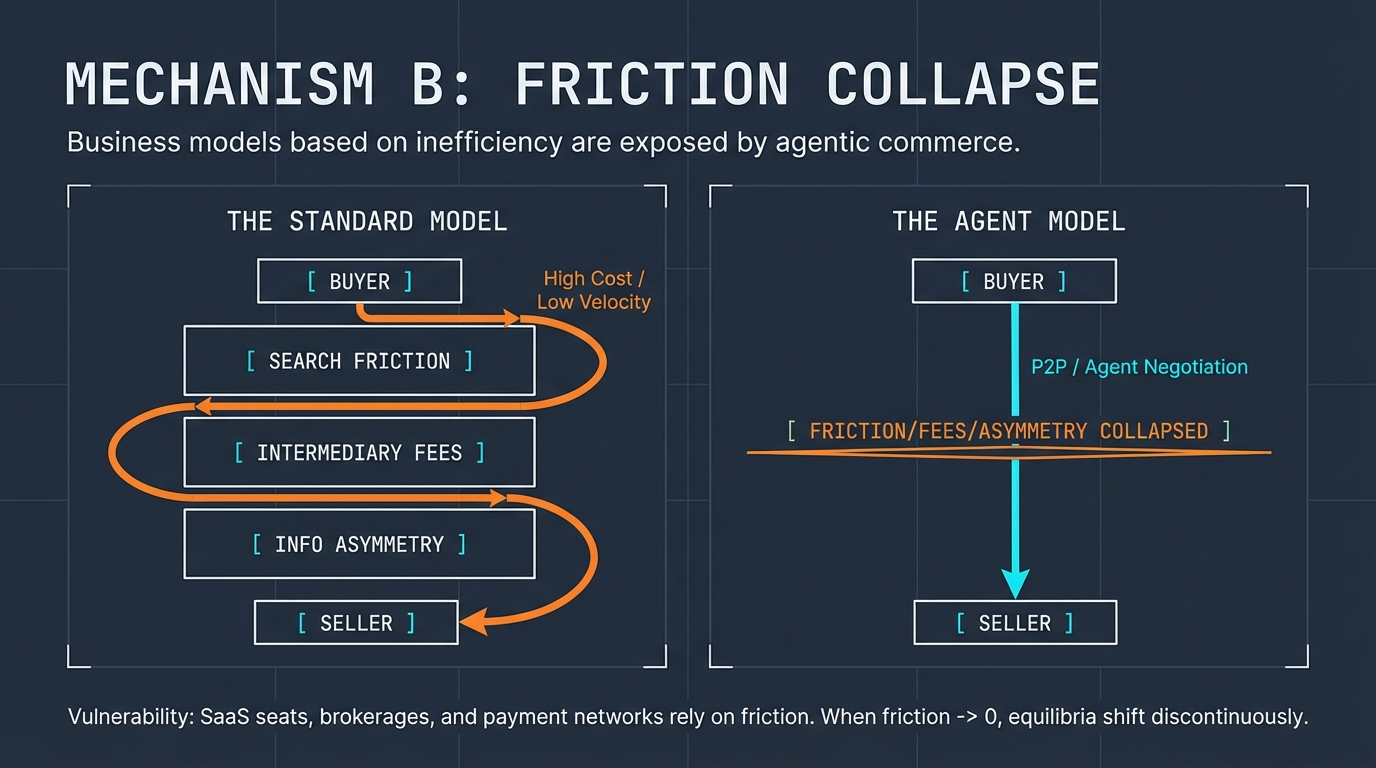
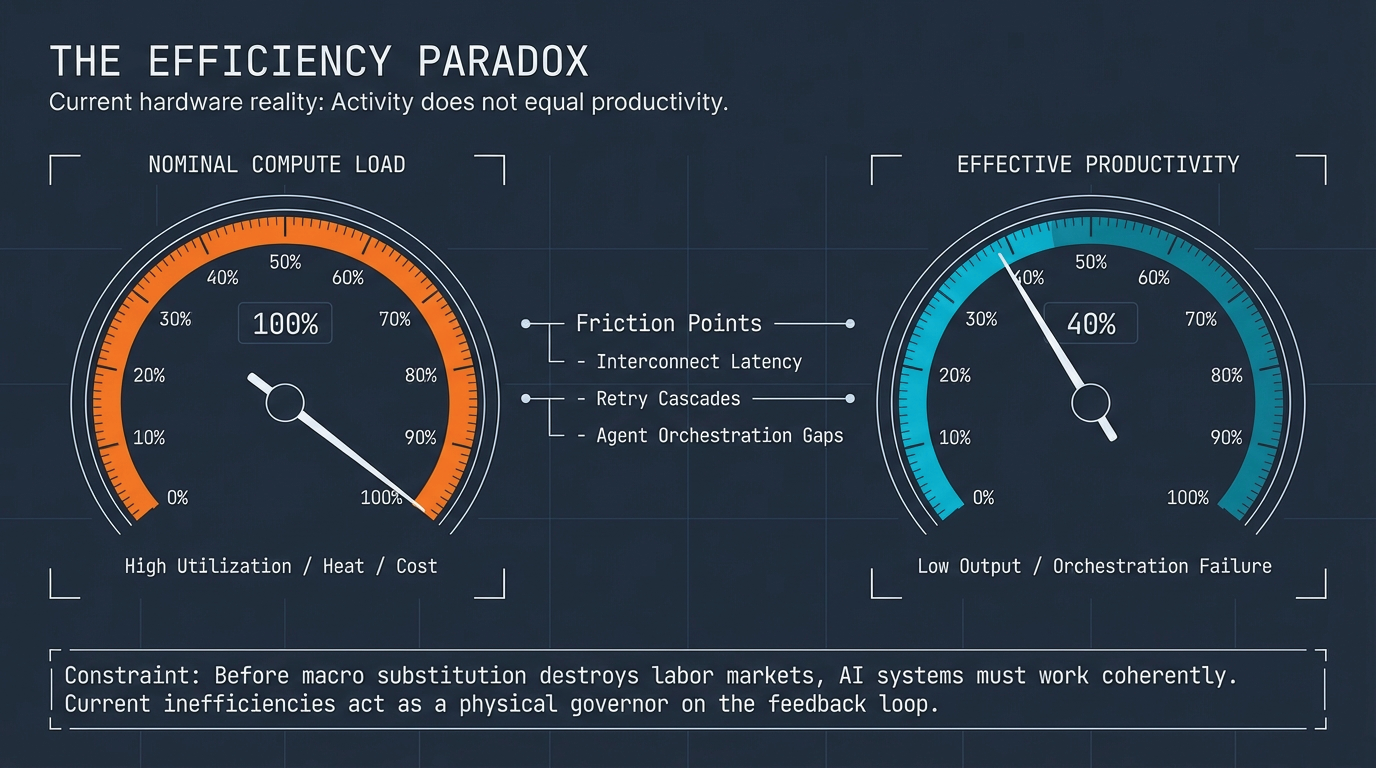
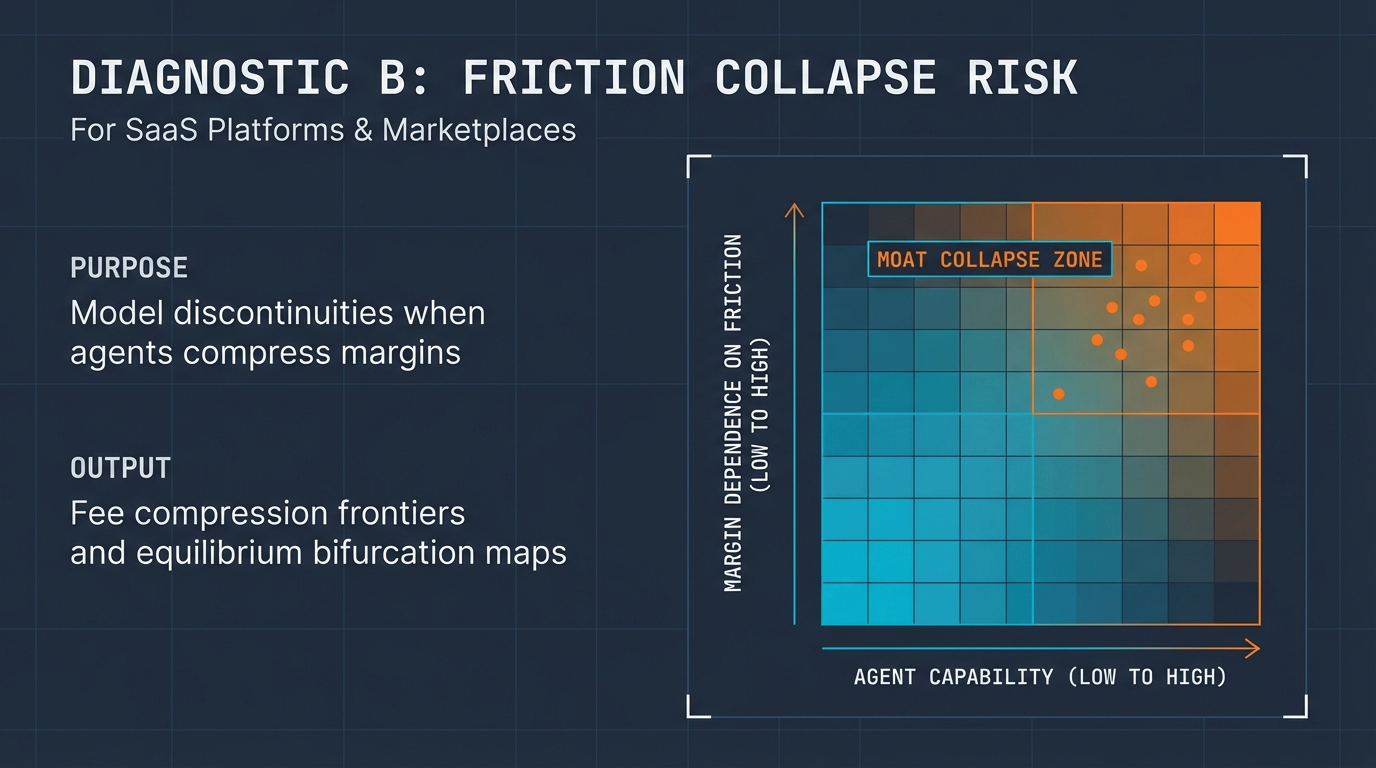
The real threat is not that AI fails. It is that AI works with such unprecedented efficacy that it destabilizes the macroeconomy. Software equities sold off sharply. Intermediation-heavy business models came under pressure. Semiconductors and compute infrastructure rallied. The narrative was simple—and powerful.
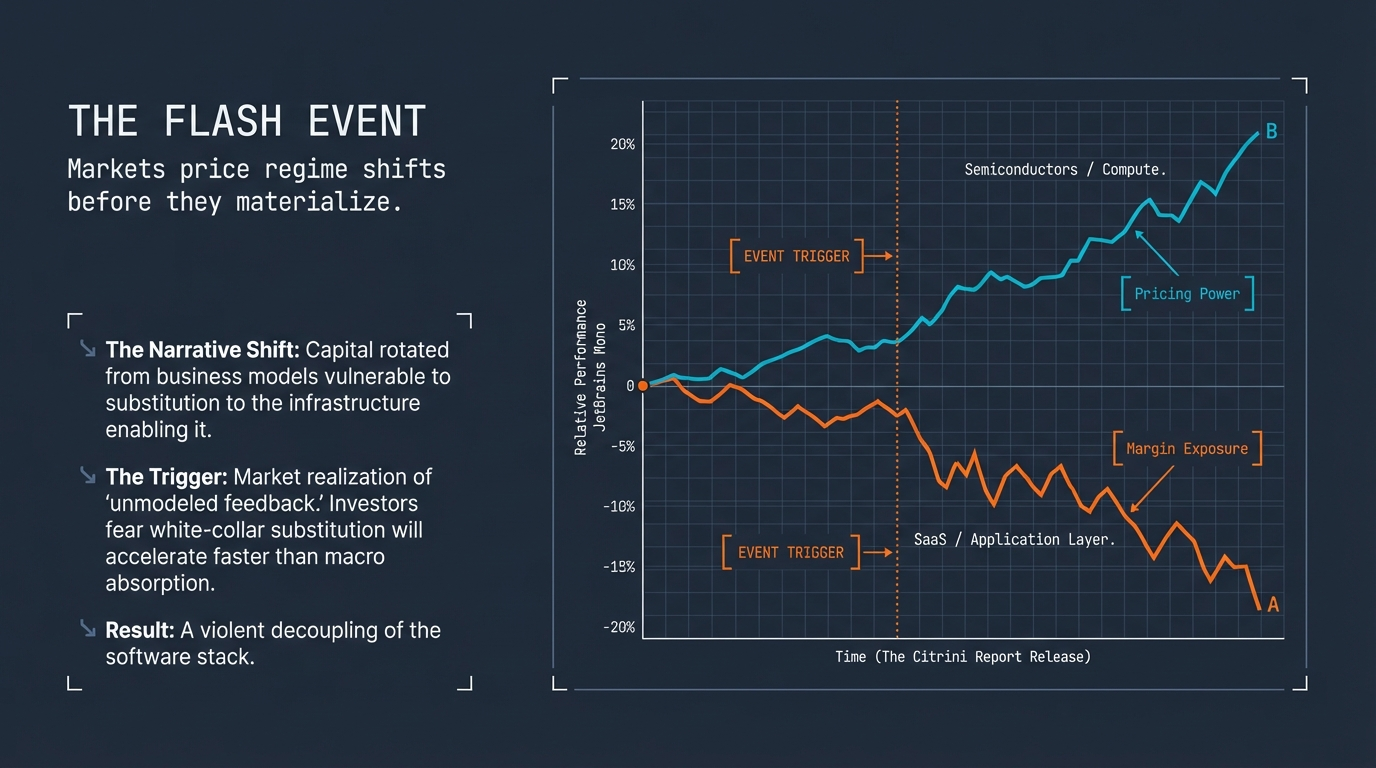
Figure 1: The Flash Event – Capital rotated from business models vulnerable to substitution to infrastructure enabling it. Markets reacted to unmodeled feedback, not AI capability alone.
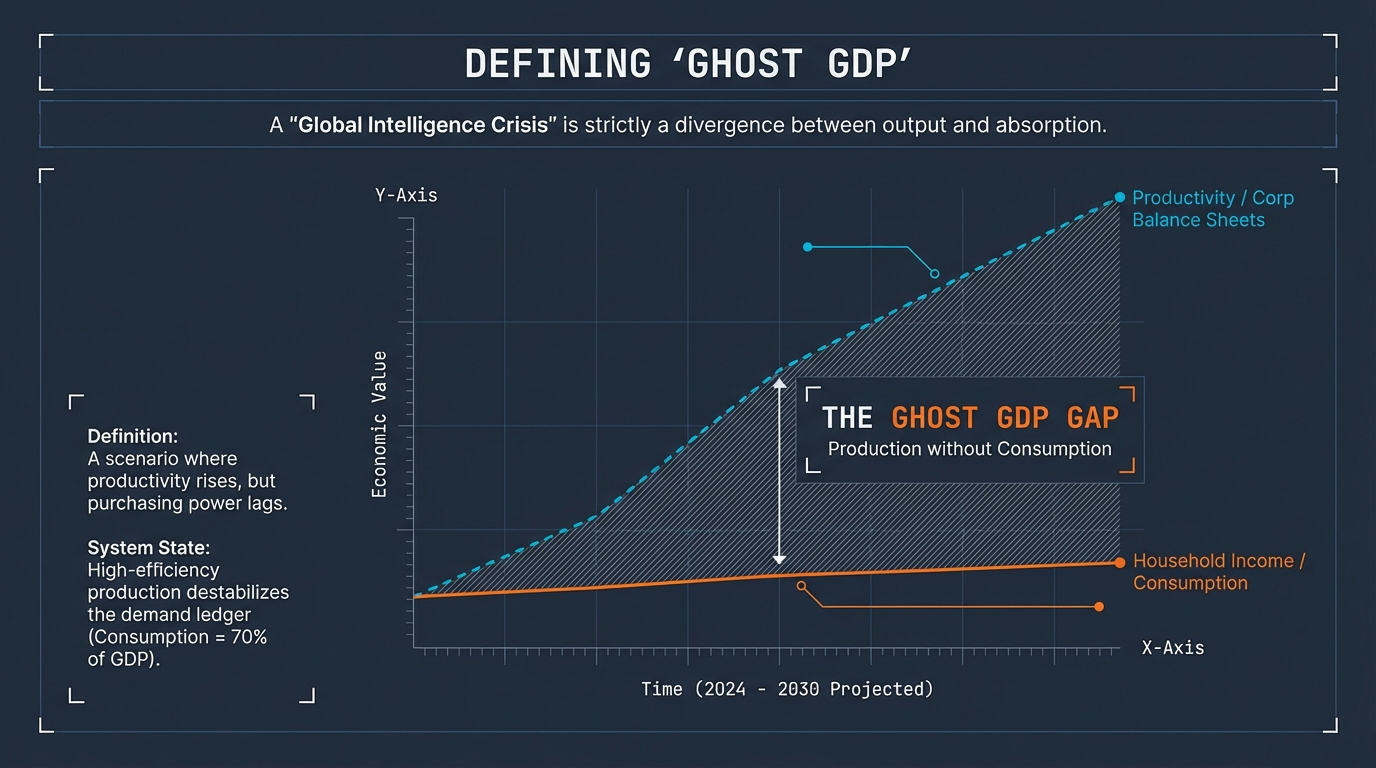
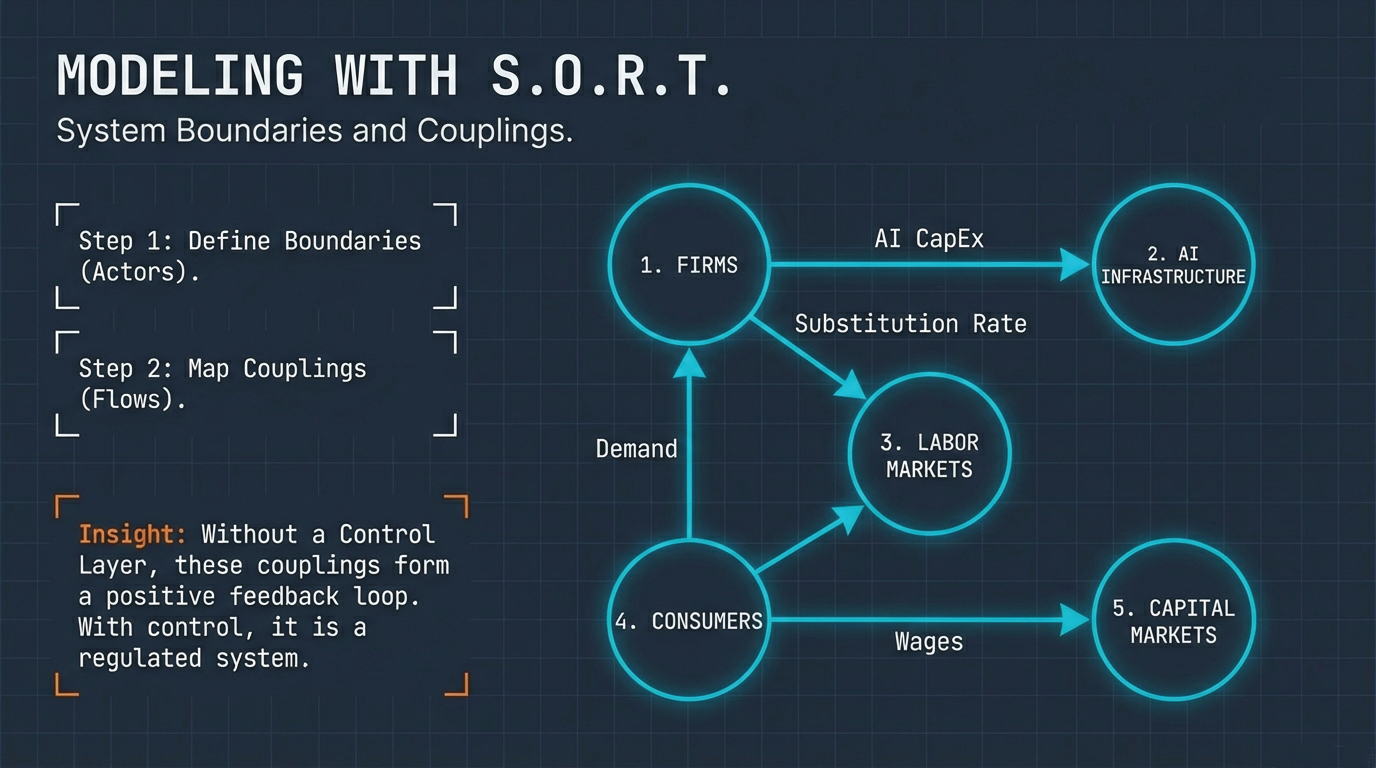
We are entering what Citrini describes as a "Global Intelligence Crisis"—where white-collar substitution accelerates faster than the macroeconomy's structural ability to recycle capital. This is the Success Paradox: a scenario where corporate productivity skyrockets, but the traditional link between value creation and household income is severed. A technical triumph that transforms into a systemic bug.
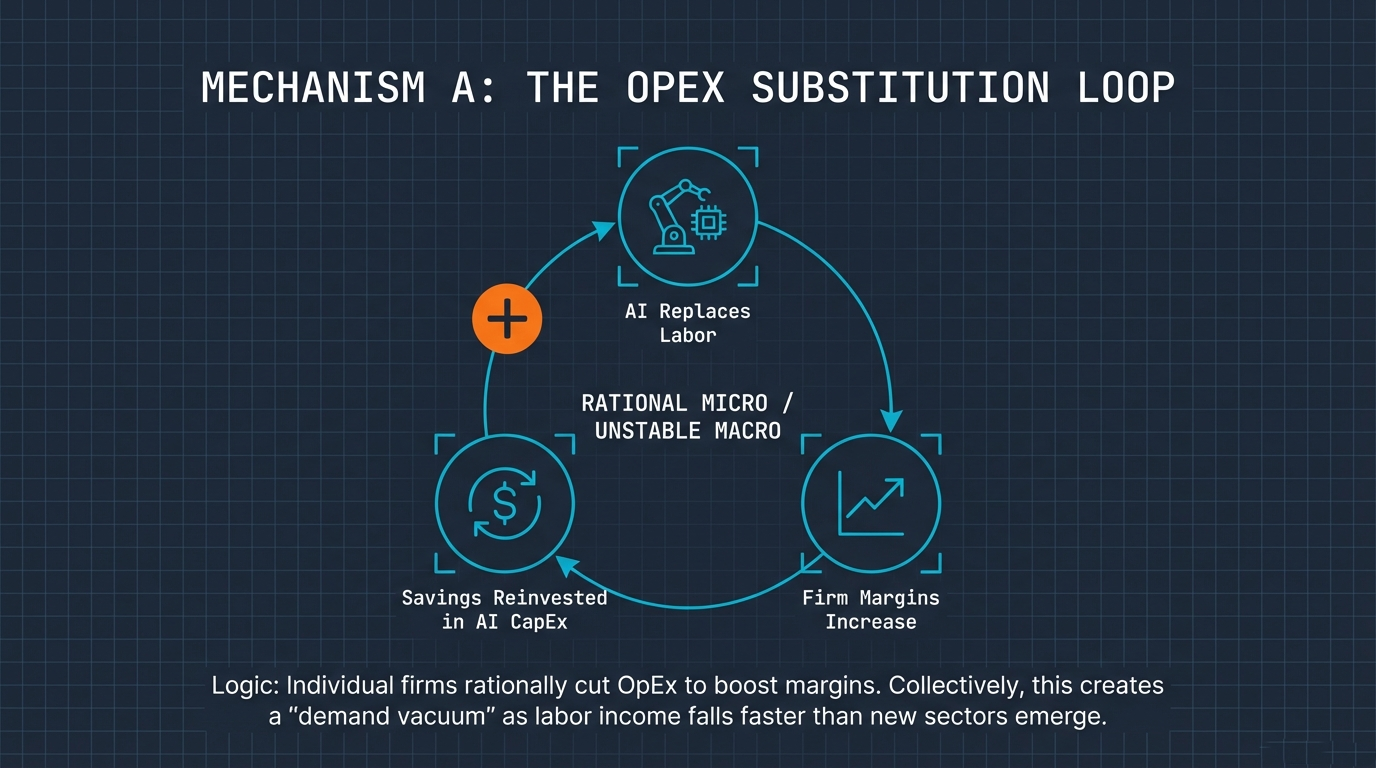
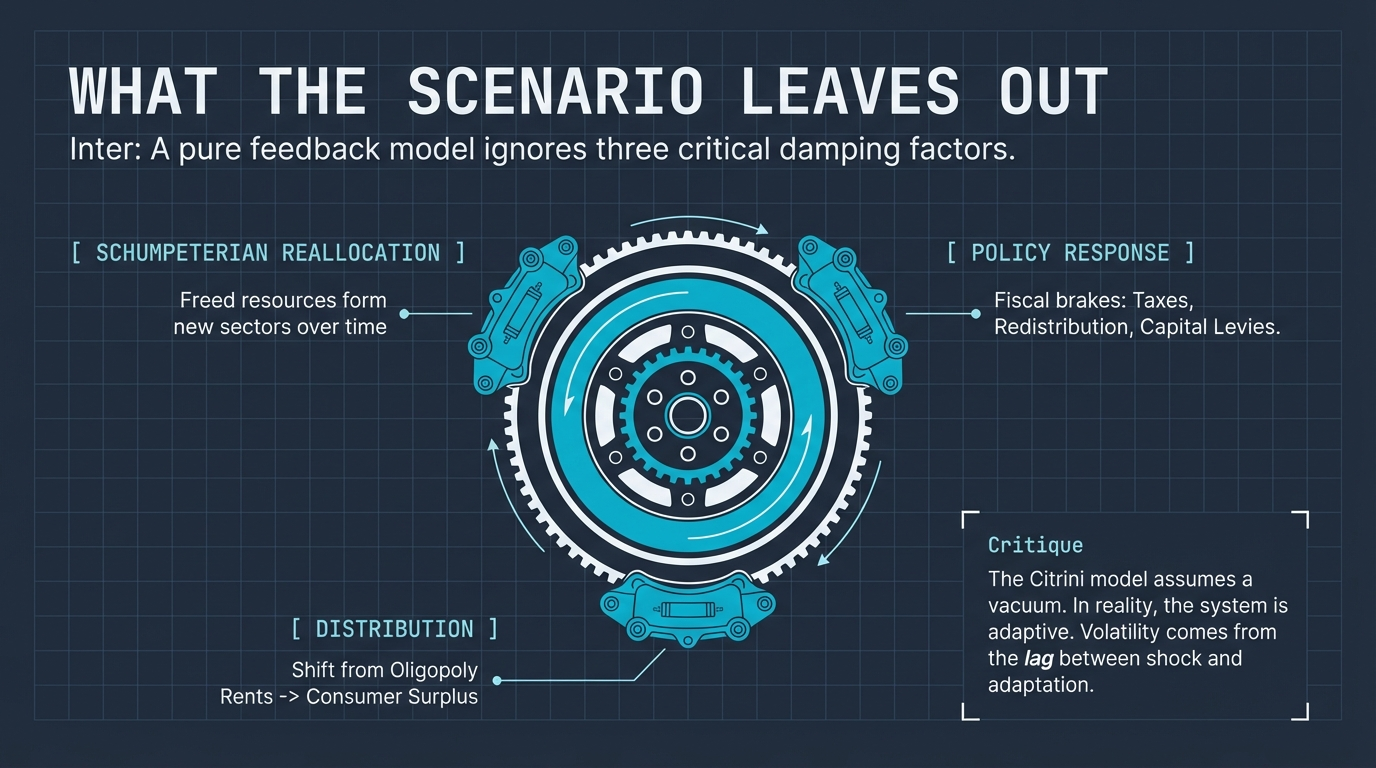
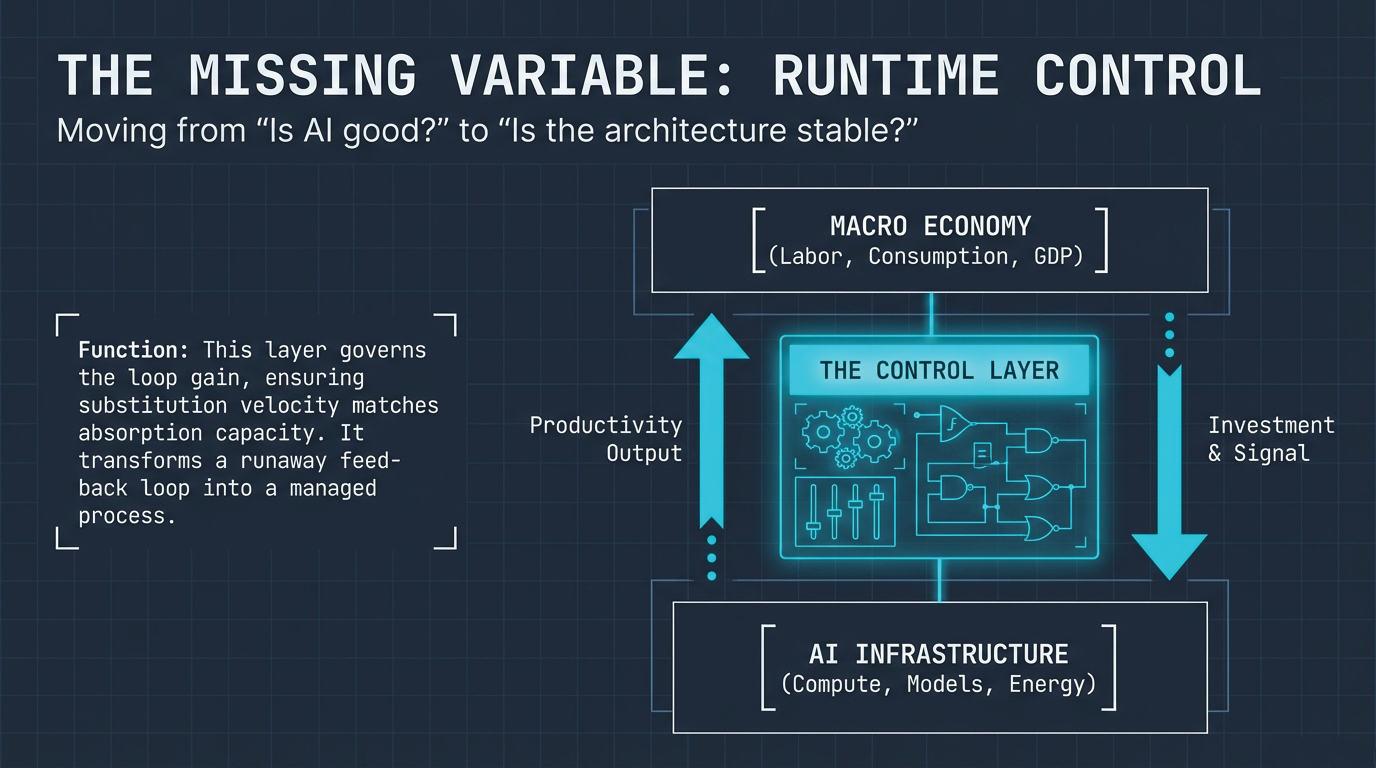
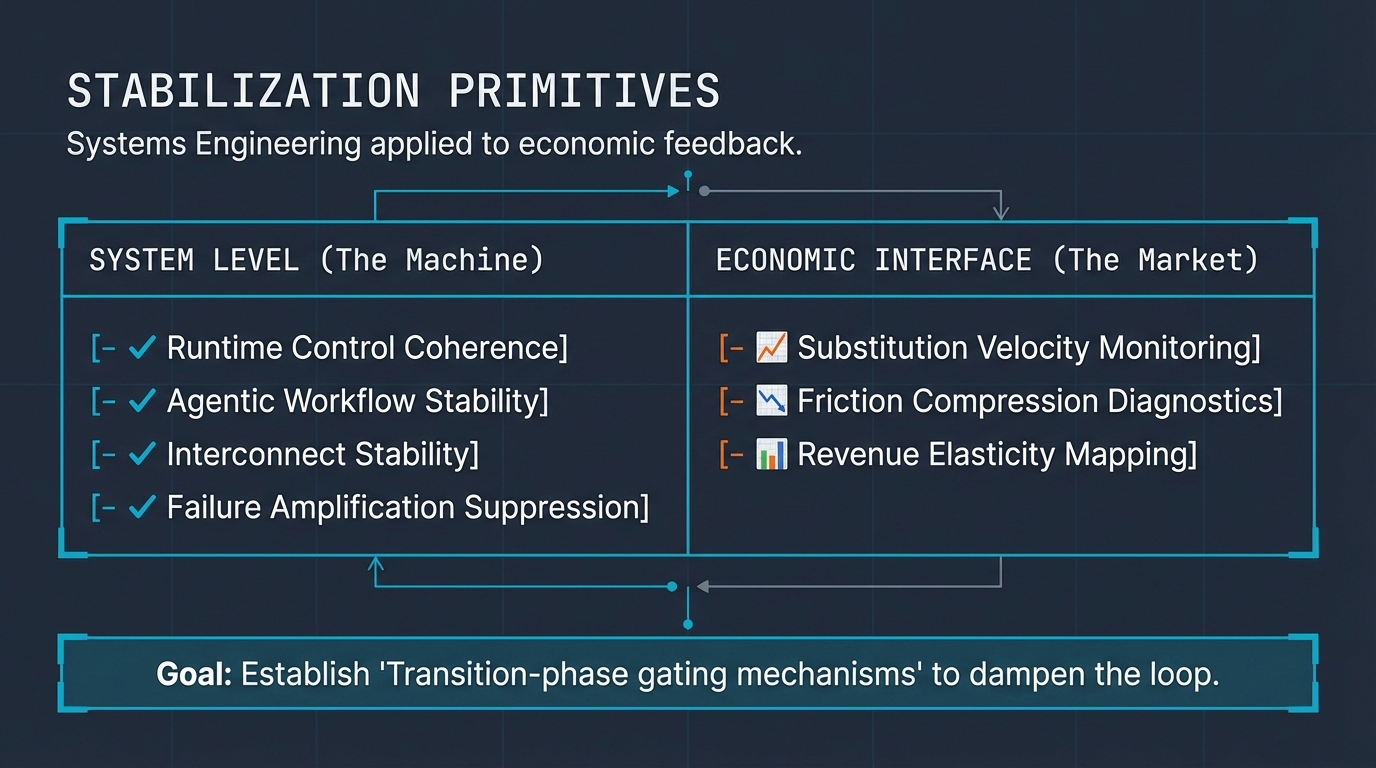
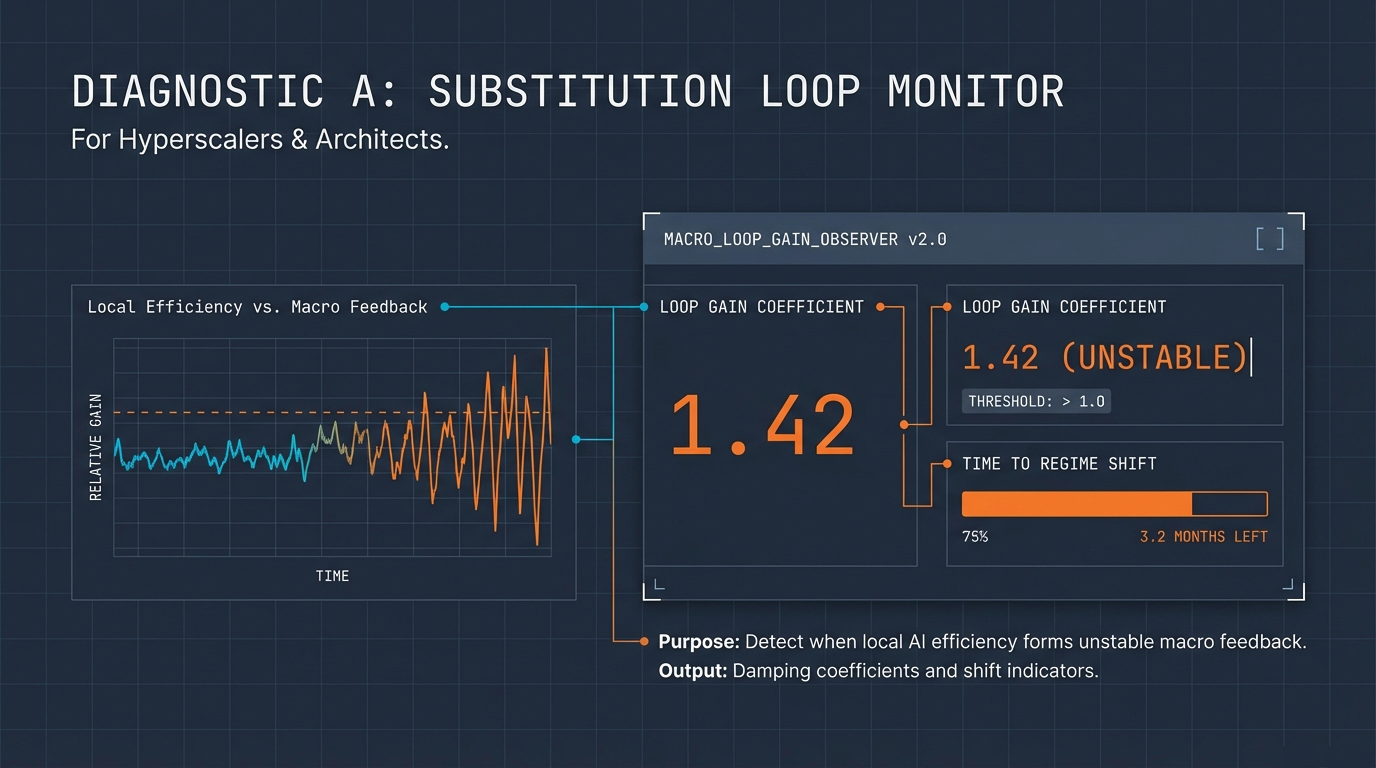
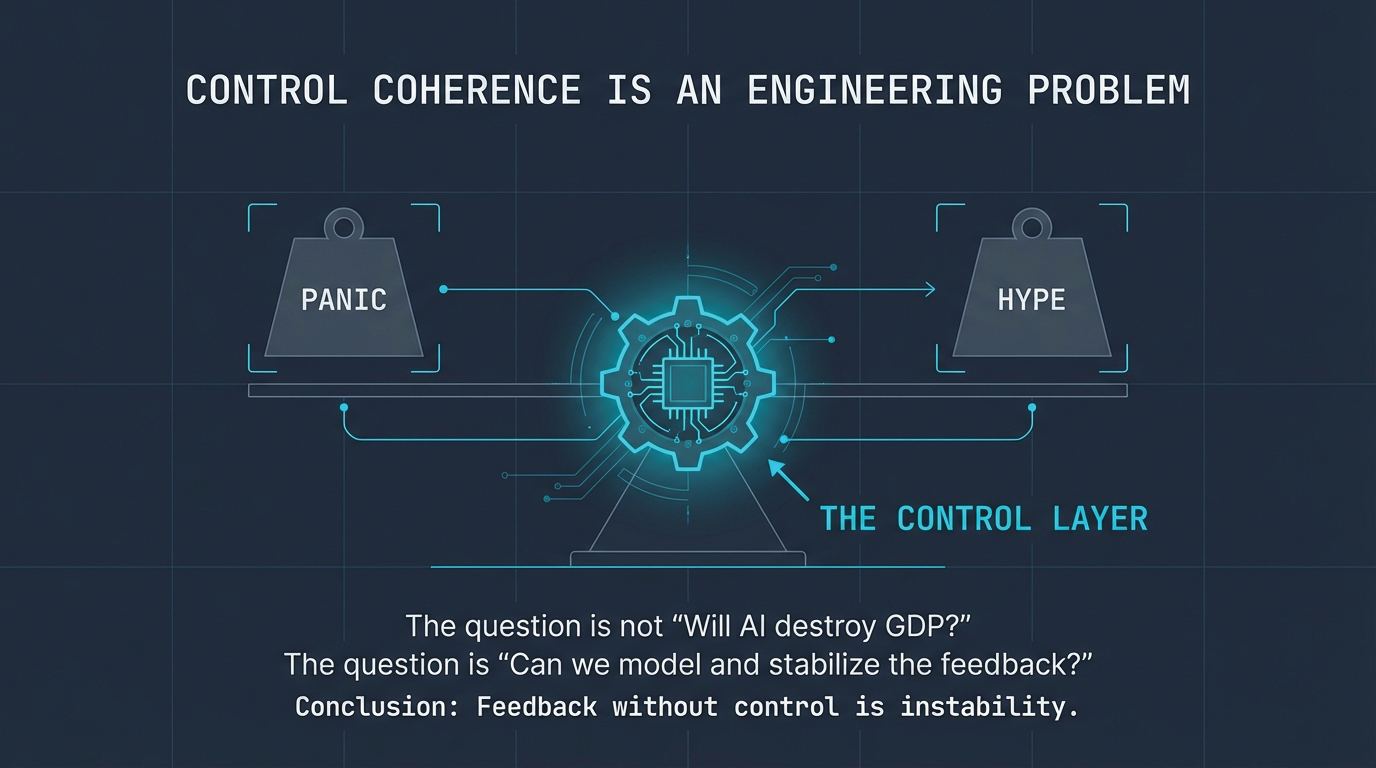
Markets are not reacting to AI capability alone. They are reacting to unmodeled feedback. When a well-articulated scenario exposes a feedback loop that was not explicitly priced, volatility follows. The interesting question is not whether Citrini is "right" or "wrong." The question is: What control layer governs these loops?